
What 362 Student Surveys Reveal About Belonging: Fun Helps, Peer Support Matters More
Over the 2024-2025 school year and into summer 2025, the Connections program collected 362 student exit-ticket surveys after meetups and activities. The surveys span multiple crews, event types, and contexts, from small conversation-based meetups to larger shared activities. They include both scaled questions (for example, inclusion, support, enjoyment) and open-ended reflections.
We analyzed responses event-by-event to reduce noise and make fair comparisons across formats. The goal was not simply to ask whether students liked an experience, but to understand what consistently contributes to belonging, and how meetups and activities each play a distinct role.
A common question we hear is: if students enjoy activities more than meetups, should we just do more activities? The data points to a more useful answer: activities and meetups do different jobs, and the strongest belonging outcomes come from designing both around peer support.
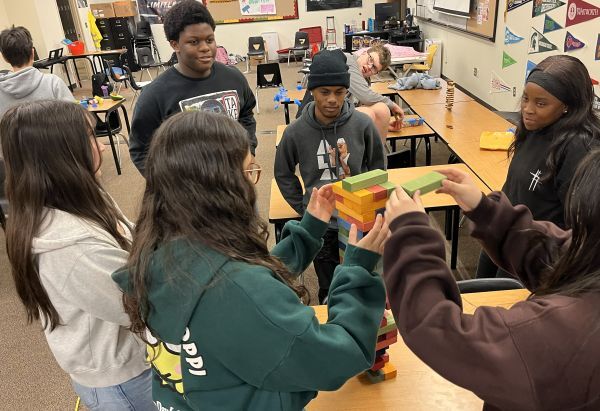
Key findings from 362 surveys
- Students rate activities as more enjoyable than meetups, on average. Activities are easier to say yes to: they are concrete, social, and feel special, which helps broaden participation.
- Enjoyment and belonging move together, but they are not the same thing. Highly enjoyable events did not automatically deepen connection, and some moderately enjoyable events produced strong belonging.
- Peer support is the most consistent predictor of belonging across event types. When students felt supported by one another, belonging was high, whether the event was a conversation meetup or a hands-on activity.
- Challenge does not undermine belonging when support is present. In activities especially, students sometimes reported feeling nervous or challenged while also reporting strong belonging.
What this means for program design
Activities function as the front door. They lower the barrier to entry, attract broader participation, and create shared experiences that make connection possible.
Meetups function as the engine. They deepen relationships, help students feel heard and known, and sustain belonging over time, even when they are less immediately fun.
Programs that rely only on activities risk shallow or short-lived connection. Programs that rely only on meetups risk lower participation and missing students who need an easier way in. The strongest belonging outcomes come from treating the two as a system: use activities to bring students in and meetups to help relationships stick.

How to design activities that build belonging
Enjoyment is a hook. Peer support is the mechanism. Activities build belonging most reliably when they create structured moments where students rely on, encourage, and notice one another, especially when something feels new or challenging.
Ways to make peer support unavoidable:
- Build interdependence: design tasks so students need one another to succeed.
- Normalize help-seeking early: make it expected that everyone will need help at some point.
- Use intentional pairing and regrouping: mix students so support and connection expand beyond friend groups.
- Create quick moments of peer recognition: ask who helped you, or who you want to thank.
- Use the in-between time: travel, waiting, and snacks are often where connection happens most naturally.
- Reframe challenge: challenge does not reduce belonging on its own; unsupported challenge does. When support is built in, shared challenge often strengthens connection.
Bottom line
If belonging is the goal, the real question is not activities or meetups. It is whether we are consistently creating spaces of any kind where students support one another.
Belonging does not come from fun alone, or from talking alone. It comes from shared experience, mutual support, and feeling that you matter to the people around you.


