
Black History Month 2026: A Century of Celebration
This February marks the 100 year anniversary of the official recognition of Black History in the United States. Accordingly, Commemoration of Black History is the theme of Black History Month 2026.
This year’s celebration not only honors Black History but salutes the those of the past 100 plus years who have fought to include Black Americans and their contributions to the American story on the historical record.
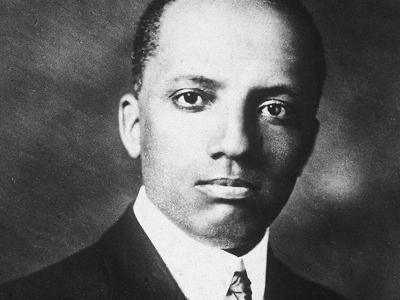
Carter G. Woodson
Foremost among those Americans was Carter G. Woodson who took up the cause of recognizing the accomplishments and contributions of Black Americans soon after the death of Frederick Douglass in 1895. Woodson, who became the second PhD recipient at Harvard after W.E.B. De Bois, recognized that a Black America denied its history was being denied its humanity.
He said, “Those who have no record of what their forebears have accomplished lost the inspiration which comes from the teaching of biography and history.”
Additionally, Woodson warned: “If race has no history, if it has no worthwhile tradition, it becomes a negligible factor in the thought of the world, and it stands in danger of being exterminated.”
Building on the 1897 work of educator and activist Mary Church Terrell, who successfully lobbied the Washington DC “colored schools” board to recognize the celebrated day (February 14) of Frederick Douglass’s birth as Douglass Day, Woodson announced Negro History Week in 1926, keeping it in February in honor of Douglass and Abraham Lincoln.
As the United States celebrates its 250th birthday this summer, it is important that the commemoration honors a history that is inclusive, accurate, and uncensored.
For decades, if not centuries, American history as taught in American classrooms was none of these.
Woodson noted this failure in his 1933 book, The Mis-education of the Negro. He denounced classical education that gave “little thought” to the Black race and “did not take the Negro into consideration except to condemn or pity him.” He blasted the lack of Black literature taught in American classrooms. It was, he said, as if Black people were “not supposed to have expressed any thought worth knowing.”
Black History Week was changed to Black History Month in 1970 and was federally recognized in 1976.
For the most part, curricula across American classrooms have rightly incorporated the Black History as American history, including the horrors of slavery, Jim Crow, and legalized segregation. Many Black authors have been awarded Pulitzer Prizes.
Today American History, and Black History in particular, is under attack.
In efforts to sanitize the past and present a more singular American story and perspective, the Trump administration has ordered the removal of references to slavery and Black History from national parks and federal buildings. Various Republican-led legislatures in the South have banned or limited the teaching of slavery and Jim Crow in their states’ classrooms. They have banned books, including the Pulitzer Prize winning Beloved by Nobel laureate Toni Morrison.
The erasure of Black History is apparent in this year’s White House statement proclaiming February of 2026 as of Black History Month: “This month, we are also reminded that the source of our strength is rooted not in our differences, but in our shared commitment to freedom under one beautiful American flag. For decades, the progressive movement and far-left politicians have sought needlessly to divide our citizens on the basis of race, painting a toxic and distorted and disfigured version of our history, heritage, and heroes.”
Although the current president of the United States went on to laud Black heroic figures such as Frederick Douglass and Harriet Tubman, he nonetheless never mentioned their deeds nor the oppression against which they dedicated their lives.
Black History cannot be erased without erasing American History.
As the country and the world honors Black History this month, it’s important to note that the beauty of America lies in the diversity of its citizens, their heritages, and their stories.
They are truly what makes America great.
Black History Month 2026 celebrates more than 400 years of Black History in America and those who have fought for its inclusion in our classrooms, our culture, and our conversations.


